Why Does PPF Lift at the Edges? 5 Common Factors Installers Should Understand
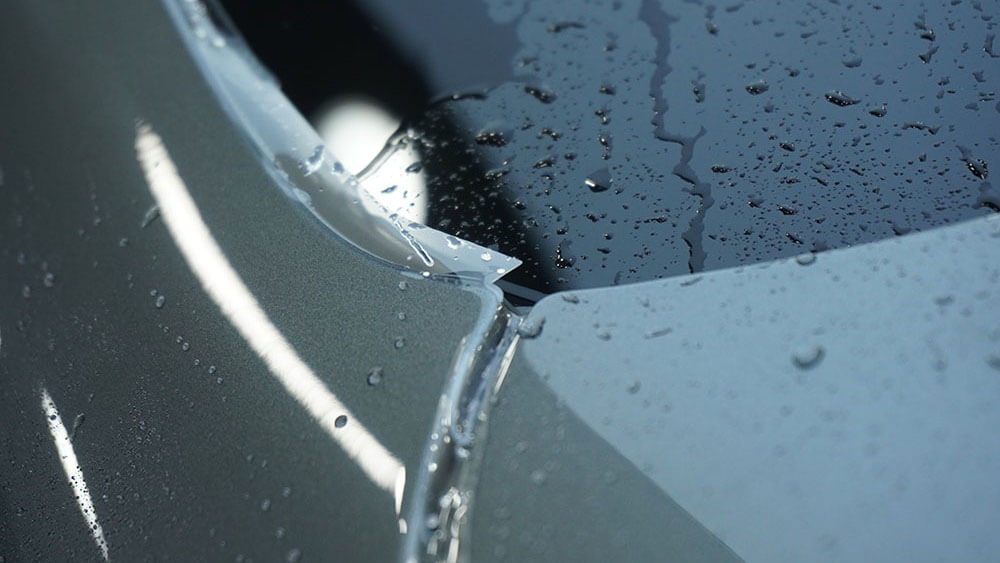
Edge lifting is one of the most common problems encountered during PPF installation. Even when the main surface looks perfectly smooth, the edges and corners may begin to lift after the car leaves the bay. The result is rework, additional labour cost, and a customer who now doubts the film they bought.
So why does it happen? In most cases it is not one dramatic mistake but a combination of small ones. Here are five factors worth understanding — for installers, and for anyone sourcing paint protection film.
1. Improper Surface Preparation
Dust, oil, wax, or other contaminants on the paint surface can affect film adhesion. Even small amounts of contamination around the edges may create problems, because that is exactly where the film has the least contact area and the most tension. Edges should be wiped down last, with a clean section of cloth, and never with the same towel that has already been across the lower panels.
2. Excessive Film Stretching
PPF needs to conform to different curves and complex body shapes. However, excessive stretching can create tension within the film. The film may look flat on the day of installation, but the elastic memory is still there. Over time, that tension pulls the material back toward its original shape and contributes to edge lifting — especially around recessed areas and bumper corners where stretch ratios are highest.
3. Adhesive Performance
The adhesive layer plays a central role in how well PPF bonds to the vehicle surface. Initial tack, final adhesion, and adhesive stability can all influence installation results. A film with aggressive initial tack may hold an edge early on but grab too fast to reposition, while a film with slow build-up needs proper post-heating to reach final bond strength. Consistency between batches matters as much as the headline number on the TDS.
4. Improper Edge Finishing
Edges, corners, and recessed areas require careful handling. Insufficient edge finishing — or incomplete post-heating where the manufacturer recommends it — may increase the risk of lifting. Wrapped edges need enough material to fold behind the panel, enough heat to relax the adhesive, and enough pressure to drive out the last of the slip solution. Skipping any of the three leaves an edge that is only holding by surface tension.
5. Film Material and Product Quality
Different PPF products can have different levels of flexibility, recovery behaviour, and adhesive performance. These characteristics affect how the film handles complex curves and maintains contact with the surface. A highly elastic TPU with good recovery will forgive a certain amount of installer error; a stiffer or cheaper construction will not. This is why the same installer can get different results from two rolls that look identical on the invoice.
More Than Just an Installation Problem
PPF edge lifting is not always caused by a single factor. Installation technique, surface preparation, working conditions, adhesive characteristics, and film performance can all play a role — and in a workshop with high humidity or a cold bay, the balance shifts again.
Understanding these factors matters for both installers and PPF suppliers. A good installation result depends on more than just the film itself, but the film is the one variable the supplier controls completely. That is why we test adhesion and recovery on every production batch, not only on the sample roll: see our TPU gloss PPF specification for the adhesive and elongation values we publish, and the TPH PPF range for budget programmes where the same discipline still applies.
What is the most common cause of PPF edge lifting in your experience: installation technique, adhesive performance, or film quality?
Interested in Our Films?
Request samples or a quote for your market — we reply within 24 hours.
GET A QUOTE