A Beginner’s Guide to Automotive Color Change Film
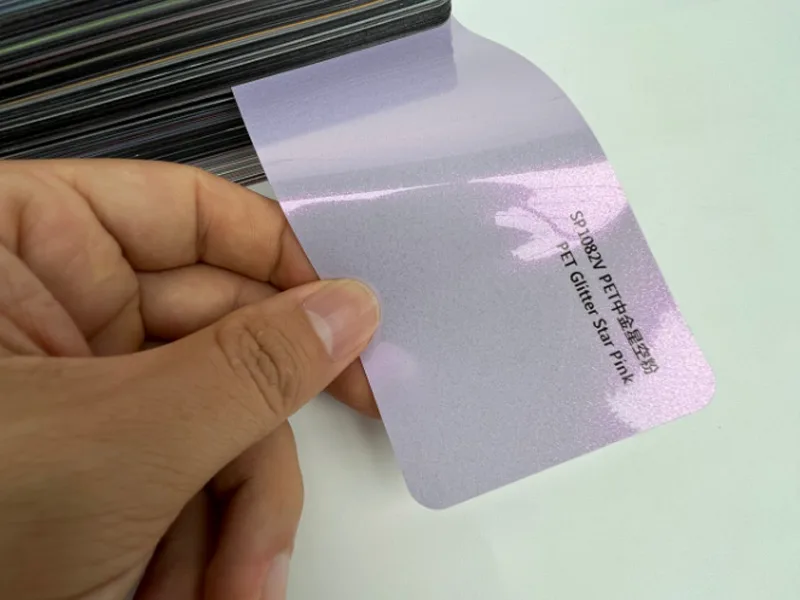
Automotive color change film has become a popular way to give a car a new look without repainting it.
But with so many materials, finishes, and product types available, it can be confusing to understand the differences.
Here’s a simple introduction to automotive color change film.
- Color Change Film vs. Paint Protection Film (PPF)
These two products are often confused, but they serve different purposes.
Paint Protection Film (PPF)** is primarily designed to protect a vehicle’s paint from scratches, stone chips, and everyday damage. Traditional PPF is usually transparent, although colored PPF is also available.
Color Change Film** is mainly designed to change the vehicle’s appearance. It comes in a wide range of colors and finishes, while also providing a degree of surface protection.
Depending on the product, color change films may use PVC, PET, TPU, or other material structures.
The key difference is their primary purpose:
PPF focuses on paint protection.
Color Change Film focuses on appearance, with additional protection.
Some specialized applications combine different films, but compatibility between the materials and adhesive systems should always be considered.
- Common Types of Color Change Film
Color change films come in many different finishes.
Gloss:A smooth, high-gloss finish that resembles the appearance of automotive paint.
Matte: A non-reflective finish with a subtle, understated look.
Satin: A finish between gloss and matte, offering a soft, smooth sheen.
Metallic: A finish with metallic particles that create depth and reflectivity.
Color Shift / Chameleon:A film that changes its visual appearance depending on the viewing angle and lighting.
Custom Graphics:Films designed with patterns or customized visual effects.
Different finishes can create completely different looks, even when applied to the same vehicle.
- PVC, PET, and TPU: What’s the Difference?
The material is one of the factors that influences a film’s performance.
PVC Color Change Film
PVC is widely used in automotive color change films. Depending on the manufacturing process, PVC films can offer different levels of flexibility, conformability, and durability.
PET-based color change films are another option in the market. Their appearance, surface characteristics, and installation behavior depend on the specific product structure and formulation.
TPU Color PPF
TPU is widely used in higher-performance paint protection films because of its flexibility, elasticity, and impact resistance.
Some color PPF products use TPU to combine color customization with paint protection.
It’s important to remember that material alone does not determine the quality of a film. The coating, adhesive, film structure, and manufacturing process all matter.
- What Should You Look for in a Color Change Film?
When evaluating a color change film, there are several important factors to consider.
Color Stability
Does the film maintain its color and appearance during outdoor use?
Weather Resistance
How does it perform under UV exposure, temperature changes, and different environmental conditions?
Conformability
Can the film adapt to complex curves and body lines without excessive stretching or visible defects?
Adhesive Performance
Does the adhesive provide reliable bonding during installation? Can the film be removed appropriately when needed?
Dimensional Stability
Does the film remain stable after installation, or is there a risk of shrinkage, lifting, or edge issues?
Surface Finish
Is the finish consistent across the film? Does it maintain the intended gloss, matte, satin, or metallic appearance?
These details can make a significant difference in the final result.
Final Thoughts
Choosing a color change film is not just about finding a color you like.
The material, finish, adhesive, installation behavior, and long-term performance all deserve attention.
A film may look impressive in a sample book, but its real performance becomes clear when it is installed and used on a vehicle.
For those working in the automotive film industry:
Which factor matters most to you when evaluating a color change film — appearance, material, installation performance, or durability?
I’d be interested to hear your thoughts.
Interested in Our Films?
Request samples or a quote for your market — we reply within 24 hours.
GET A QUOTE